Rasmus Pedersen & Alex Holcombe
Behind many published papers is a hidden layer of labour. Skilled technicians, librarians, and others work tirelessly behind the scenes, yet their contributions are not counted in the systems set up to reward researchers. One PhD-holding university staff member whom we are aware of sets up and maintains brain imaging equipment and advises researchers on experiment design. Their experience often yields additional guidance that shapes and improves the projects of everyone who comes through the door.
Yet when the resulting journal article is published, this person’s name may not appear anywhere that counts. If they are mentioned, it is likely in the acknowledgments section with a few words of thanks. However, this will be invisible to every scholarly database that university managers or funding committees consult when making decisions about where to cut costs and who to fund.
This problem is widespread across academia, and the lack of visibility harms the fairness, efficiency, and transparency of academic research. In this post, we outline the issue and a range of solutions described in further detail by us and our co-authors in a recent article.
The acknowledgment problem
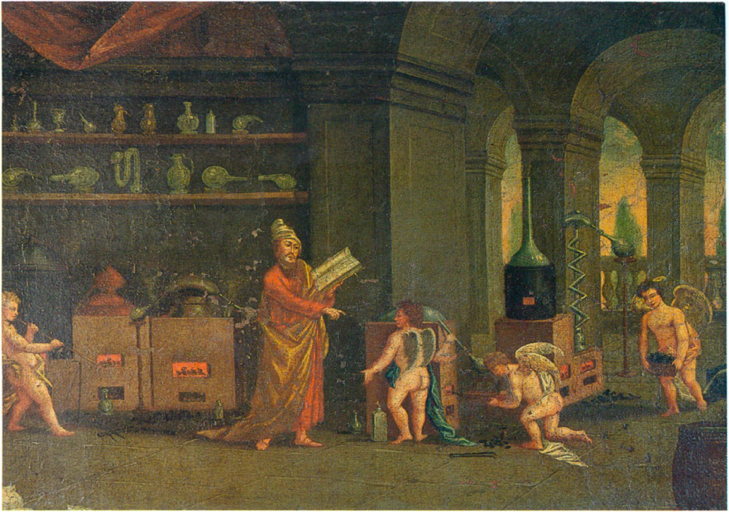
Being listed as an author on a journal article matters enormously for promotion, grant applications, and professional standing in academia. But this type of recognition has historically been tied much more to writing about a scientific project than to actually doing the work. Until 2023, the influential guidelines of the International Committee of Medical Journal Editors specified that to qualify for co-authorship a person must contribute to writing or revising the manuscript. This is a legacy of early modern science, which centred the upper-class gentlemen who directed and wrote up the work, and who often failed to name or even acknowledge the instrument makers and artisans necessary for the work. Today more than ever, research takes place within large research teams and consortia with a great deal of work done before anyone drafts a manuscript. This work involves increasingly complex tasks and shared resources that rely on technical and professional staff ranging from lab and field technicians, to statisticians, software engineers, research managers, and librarians.
 |
|---|
| One artistic norm which sustained technicians’ invisibility in the 17th century was to depict only the scholar as identifiable while illustrating the technical equipment as being operated by helpful putti rather than by the actual human assistants doing the work (Copyright Museum of the History of Science, University of Oxford). In his article, Steven Shapin notes multiple similar artistic practices. |
While the culture has changed over the centuries, still today, many important contributions are recognised only with a ’thank you’ in the acknowledgments section of a journal article. Although there may be legitimate reasons not to list every contributor as a co-author, acknowledgments sections as they are currently structured provide essentially no professional credit to those named in them.
Acknowledgments are not indexed by scholarly databases such as Scopus, Web of Science, or Google Scholar. This means that university decision-makers and research funders cannot easily see the contributions of a technician to published work. A librarian who designed the search strategy for a systematic review — a contribution that can take weeks and requires specialist expertise — may appear in a single sentence of thanks that is not captured by any database.
Recent research has confirmed how acknowledgees are disproportionately drawn from less privileged groups, including early-career researchers, support staff, and marginalised groups. In the context of international research partnerships, this can take the form of parachute science where people from low- and middle-income countries who supply essential local knowledge, labour, and expertise are acknowledged in a paragraph no one reads, while authors from high-income institutions collect the citation counts.
This matters beyond fairness concerns
The case for reform is not only a question about fairness, but also about the functioning of science itself.
Funders and institutions often allocate resources based on individuals’ trackable records of contributions. If large swathes of contributions are invisible, those allocation decisions are made on incomplete information. This may result in the wrong people receiving funding. Conversely, the people doing essential but uncredited work have less incentive to do it well, or to remain in research at all.
Another important aspect concerns accountability, because knowing who did what matters when things go wrong. A recurring obstacle in investigating potentially fraudulent data is establishing who actually collected, managed, or analysed it. A richer record of contributions, one that includes non-authors, would make it easier to ask the right questions of the right people, and would open up more opportunities to scrutinise datasets, analytical methods, and study procedures.
Three routes to reform
As we and our co-authors describe in a recent article – one of the Contributorship Collaboration’s open science initiatives – there are at least three routes to improving the recognition of non-author contributors.
The first is to broaden authorship criteria so that more contributors qualify as authors. PLOS journals and the International Committee of Medical Journal Editors both updated their guidelines in 2023 to remove or soften the writing criterion. A related step, already adopted by thousands of journals, is The Contributor Role Taxonomy (CRediT), a standardised vocabulary with roles such as ‘Data Curation,’ ‘Formal Analysis,’ and ‘Writing – Original Draft.’ CRediT increases transparency about who did what and may facilitate further relaxation of authorship criteria.
The second is to unbundle research into multiple citable outputs — depositing code, datasets, and protocols to repositories where contributors are listed as authors. These items can be independently cited and indexed, giving credit directly to individuals’ specialised work. PLOS has received a multi-million-dollar grant to further this plan. This route works well in empirically driven fields but does not fit fields such as philosophy that consist purely of conceptual work.
The third route, and the one with perhaps the most immediate potential, is to improve the acknowledgments section itself.
Practical steps for improving acknowledgments
The acknowledgments section has always, in its own informal way, done something that formal contributorship systems like CRediT were later designed to do. It specifies who contributed to the project underlying the article. What it lacks is structure and detail, and without this it cannot be machine-read, indexed, or searched.
Three incremental changes could fix this, using infrastructure that already exists.
First, researchers can start including ORCID numbers (unique persistent identifiers for researchers) alongside the names of people they acknowledge, with the acknowledgee’s permission. Writing ‘We thank [Name] (https://orcid.org/xxxx-xxxx-xxxx-xxxx) for assistance with statistical analysis’ takes seconds and costs nothing. Once enough researchers do this, databases could parse these identifiers automatically.
Second, journal submission portals should treat acknowledgees more like co-authors. When a researcher submits a manuscript, they already fill in fields for each co-author’s name, affiliation, and ORCID number. An ‘add acknowledgee’ button would take minimal engineering to implement, capturing information in a usable form and giving acknowledgees the opportunity to confirm or authenticate their details. This can include specifying who did what using the CRediT taxonomy. In fact, CRediT was explicitly designed to apply to acknowledgees as well as authors, yet no journal that we are aware of uses it for acknowledgees.
Third, publishers should include acknowledgee information in the metadata files that accompany journal articles (the machine-readable JATS-XML files that scholarly databases ingest). Currently this metadata records authors, editors, and sometimes reviewers, but not acknowledgees. Doing so requires no new standard, it simply means adding a new value and tag. Publishers have already done something analogous for funders. Like acknowledgments funding information used to be written in non-machine-readable free text, however, when metadata tags for funding information were created for CrossRef in 2013, databases like SCOPUS quickly started indexing that information.
None of these steps requires a revolution because they draw on existing standards, existing infrastructure, and existing workflows. They can thus be adopted incrementally, by individual researchers, journals, or publishers — without waiting for universal agreement.
Making the invisible visible
The people who run the equipment, design the searches, manage the logistics, and mentor the next generation of researchers deserve more than a sentence at the end of a paper. They deserve a searchable record of what they contributed.
The acknowledgments section has long contained that information, in unstructured form. The question is whether the research community is willing to do the modest work needed to make it count.